> For the complete documentation index, see [llms.txt](https://hacking-notes.jord4n.pro/llms.txt). Markdown versions of documentation pages are available by appending `.md` to page URLs; this page is available as [Markdown](https://hacking-notes.jord4n.pro/de/hacking-tools/windows.md).

# Windows-Tools

Notizen zu offensiven Windows-Tools für lokale Enumeration, Privilegienprüfungen, Active-Directory-Angriffsweg-Kartierung, BloodHound, SharpHound, WinPEAS, PrivescCheck, LOLBAS, PowerUp, Invoke-Obfuscati

Windows-Tooling unterstützt die Überprüfung lokaler Berechtigungen, das Mapping von Active-Directory-Beziehungen, die Aufzählung von Endpunkten und kontrollierte Post-Exploitation. Verwende diesen Abschnitt, um das richtige Tool für die benötigten Nachweise auszuwählen: lokale Berechtigungen, schwache Dienste, Domänenbeziehungen, Angriffswege oder Referenzen zu ausführbaren Bypass-Methoden.

## Windows-Tooling-Workflow

1. Erfasse die lokale Identität, Berechtigungen, Gruppen, Prozesse, Dienste, Sitzungen, den Netzwerkstatus und installierte Software.
2. Verwende WinPEAS, PrivescCheck, PowerUp oder manuelle Befehle, um lokale Fehlkonfigurationen zu identifizieren.
3. Sammle Active-Directory-Beziehungen mit SharpHound oder BloodHound.py, wenn der Domänenkontext wichtig ist.
4. Analysiere BloodHound-Pfade auf die kürzesten kontrollierten Wege zu lokalem Admin, hochrangigen Gruppen oder zur Kompromittierung der Domäne.
5. Vergleiche LOLBAS und WADCom, wenn eine Technik von integrierten Windows-Binärdateien oder AD-Befehlssyntax abhängt.

## Windows-Tool-Kategorien

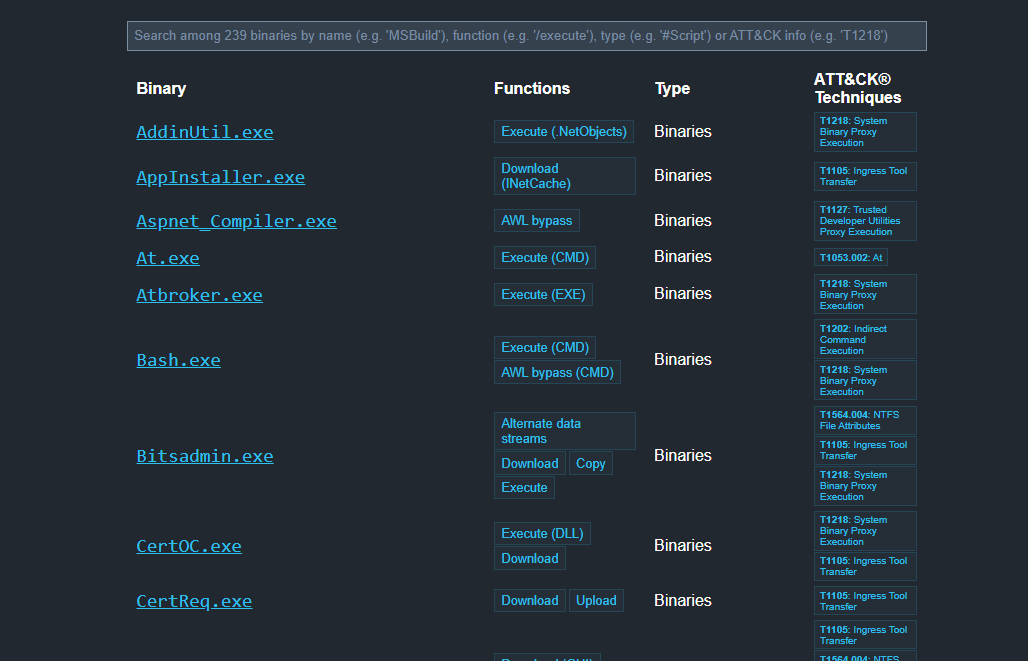
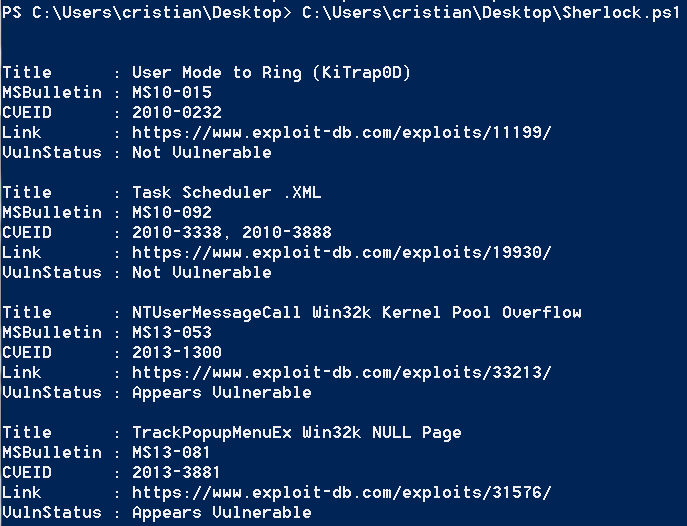
<table data-card-size="large" data-column-title-hidden data-view="cards" data-full-width="false" data-search="false"><thead><tr><th>Name</th><th>Beschreibung</th><th>Offizieller Link</th><th data-hidden data-card-cover data-type="image">Titelbild</th></tr></thead><tbody><tr><td><strong>Windows-Enumerierung</strong></td><td>Lokale Befehle und Prüfungen zur Identifizierung von Berechtigungen, Gruppen und Diensten.</td><td><a href="/de/hacking-tools/windows/windows-enumeration.md">windows-enumeration</a></td><td></td></tr><tr><td><strong>BloodHound</strong></td><td>Active-Directory-Mapping und Erkennung von Angriffspfaden.</td><td><a href="/de/hacking-tools/windows/bloodhound-tool.md">bloodhound-tool</a></td><td></td></tr><tr><td><strong>WinPEAS</strong></td><td>Automatisierte Enumerierung zur Windows-Privilegieneskalation.</td><td><a href="https://github.com/peass-ng/PEASS-ng/releases/tag/20241101-6f46e855">https://github.com/peass-ng/PEASS-ng/releases/tag/20241101-6f46e855</a></td><td><a href="https://2955439919-files.gitbook.io/~/files/v0/b/gitbook-x-prod.appspot.com/o/spaces%2Fl4EVJpcOrsgjSGsLI7p2%2Fuploads%2Fgit-blob-6e9481e03ce9481535dee569ade2212fae6c6794%2Fimage.png?alt=media">image.png</a></td></tr><tr><td><strong>PrivescCheck</strong></td><td>PowerShell-Prüfung von Windows-Fehlkonfigurationen.</td><td><a href="https://github.com/itm4n/PrivescCheck">https://github.com/itm4n/PrivescCheck</a></td><td><a href="https://2955439919-files.gitbook.io/~/files/v0/b/gitbook-x-prod.appspot.com/o/spaces%2Fl4EVJpcOrsgjSGsLI7p2%2Fuploads%2Fgit-blob-86db6e4d02451169c9883f216dde6051f684d851%2Fimage.png?alt=media">image.png</a></td></tr><tr><td><strong>LOLBAS</strong></td><td>Referenz für Windows-Binärdateien, die für Umgehungen oder Ausführung verwendet werden können.</td><td><a href="https://lolbas-project.github.io/">https://lolbas-project.github.io/</a></td><td><a href="https://2955439919-files.gitbook.io/~/files/v0/b/gitbook-x-prod.appspot.com/o/spaces%2Fl4EVJpcOrsgjSGsLI7p2%2Fuploads%2Fgit-blob-aa91777110a6898c165b88a516317a3eb8cde4f2%2Fimage.png?alt=media">image.png</a></td></tr><tr><td><strong>Sherlock</strong></td><td>Entdeckung bekannter lokaler Windows-Schwachstellen.</td><td><a href="https://github.com/rasta-mouse/Sherlock">https://github.com/rasta-mouse/Sherlock</a></td><td><a href="https://2955439919-files.gitbook.io/~/files/v0/b/gitbook-x-prod.appspot.com/o/spaces%2Fl4EVJpcOrsgjSGsLI7p2%2Fuploads%2Fgit-blob-fbcca3b2396274fea4a41da1ab0b8e0992ba3cfe%2Fimage.png?alt=media">image.png</a></td></tr></tbody></table>


---

# Agent Instructions
This documentation is published with GitBook. GitBook is the documentation platform designed so that both humans and AI agents can read, navigate, and reason over technical content effectively. Learn more at gitbook.com.

## Querying This Documentation
If you need additional information that is not directly available in this page, you can query the documentation by asking a question.

Perform an HTTP GET request on the following URL with the `ask` and `goal` query parameters:

```
GET https://hacking-notes.jord4n.pro/de/hacking-tools/windows.md?ask=<question>&goal=<user_goal>
```

`ask` is the immediate question: it should be specific, self-contained, and written in natural language.
`goal` is what the user is ultimately trying to achieve, the reason they need the answer. Sharing it helps GitBook give you a better, more relevant answer. A goal is most helpful when it describes the outcome the user wants rather than restating the question. For example, with `ask=how do I create an API token`, a goal like `automate deployments from our CI pipeline` lets GitBook tailor the answer to that use case.

The response will contain a direct answer to the question and relevant excerpts and sources from the documentation.

Use this mechanism when the answer is not explicitly present in the current page, you need clarification or additional context, or you want to retrieve related documentation sections.