> For the complete documentation index, see [llms.txt](https://hacking-notes.jord4n.pro/llms.txt). Markdown versions of documentation pages are available by appending `.md` to page URLs; this page is available as [Markdown](https://hacking-notes.jord4n.pro/hacking-tools/osint/osint-methodology/phone-osint.md).
# Phone OSINT
Phone number OSINT techniques for analyzing carriers, regions, temporary numbers, public traces, spam reports, and identity information linked to phone numbers.
Phone number OSINT can reveal carriers, regions, temporary-number usage, spam reports, linked profiles, business records, and other public identity traces. Use these techniques only during authorized investigations or controlled testing.
## Methodology
1. Normalize the number into international format before searching.
2. Identify the country, carrier, number type, and likely region.
3. Check whether the number appears in public records, business listings, spam reports, or messaging platforms.
4. Correlate findings with usernames, emails, social profiles, and breach indicators.
5. Record sources, timestamps, confidence, and whether the evidence is current or historical.
## Temporary Numbers
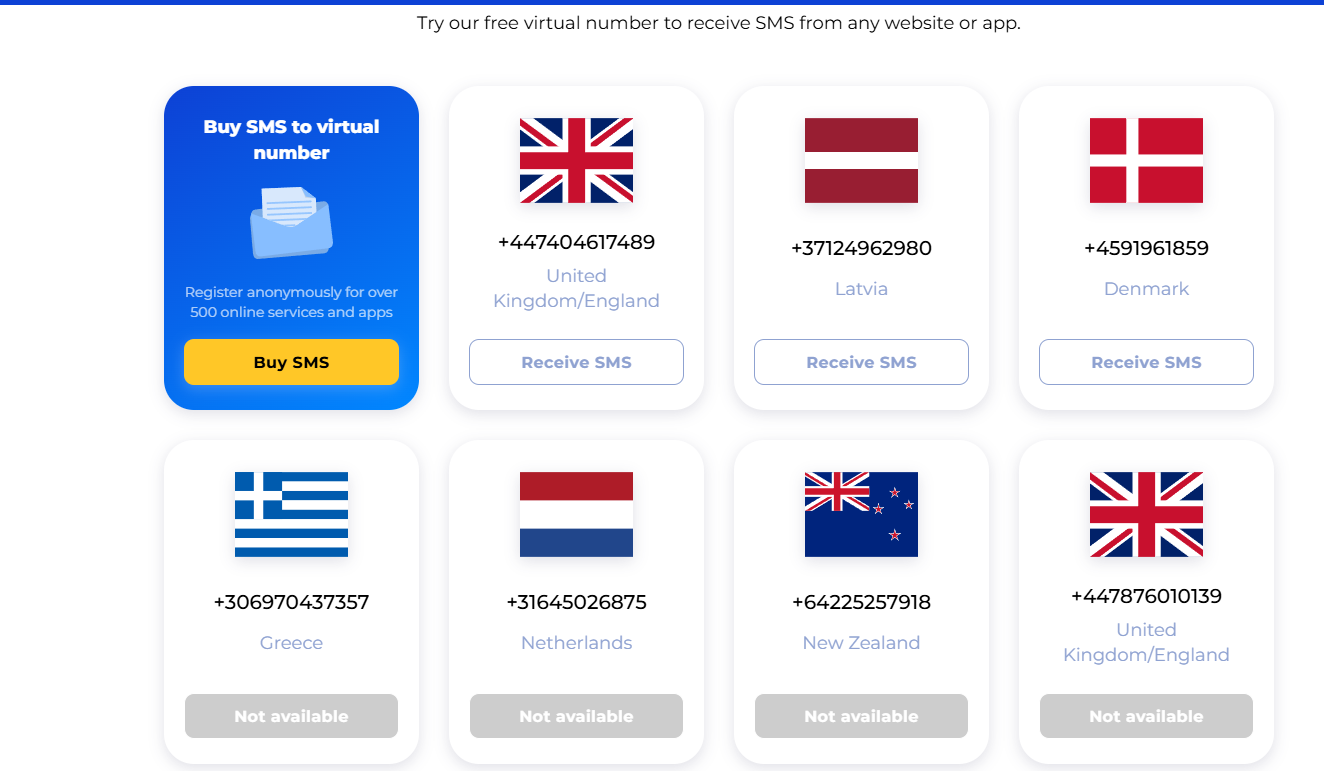
Temporary numbers can be useful for safe registration testing, account verification labs, or privacy-preserving research. Treat public inboxes and shared SMS receivers as untrusted, because anyone may see the received messages.
Common temporary-number resources include:
* **Twilio:** programmable numbers for controlled testing and more advanced workflows.
* **TextNow:** app-based numbers for calls and messages.
* **Receive-SMS:** public SMS inboxes for low-sensitivity testing.
* **Hushed:** temporary private numbers for short-term use.
* **Google Voice:** virtual numbers linked to Google accounts in supported regions.
## Number Lookup
Number lookup services can help identify names, regions, spam reports, business associations, or platform traces. Always treat the result as a lead, not as proof, because phone-number datasets can be outdated or user-submitted.
### Sync.ME
{% embed url="" %}
Sync.ME helps identify public information associated with a number, such as names and related records. It can be useful for checking whether a number appears to belong to a business or an individual.
### WhoCalledMe
WhoCalledMe focuses on community reports for spam, scam, and unwanted-call activity.
{% embed url="" %}
## Telegram Bots
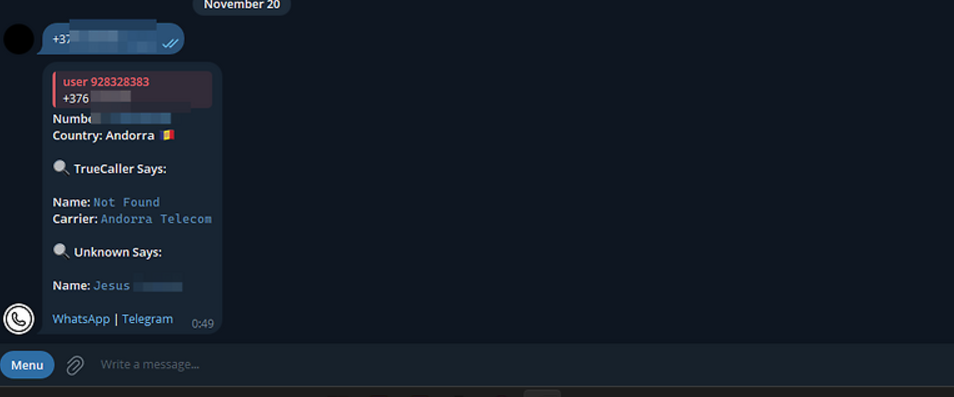
Telegram bots can support phone-number research by automating lookups or correlating public traces. Review bot permissions and avoid sending sensitive data to untrusted bots.
### Truecaller Bot
{% embed url="" %}
### Telegram OSINT
{% embed url="" %}
## Related Resources
* [People and Breach Research](/hacking-tools/osint/people-and-breach-research.md) for people lookup, email research, breach research, and identity-correlation tools.
* [Social Media Intelligence](/hacking-tools/osint/social-media-intelligence.md) for platform-focused account discovery.
---
# Agent Instructions
This documentation is published with GitBook. GitBook is the documentation platform designed so that both humans and AI agents can read, navigate, and reason over technical content effectively. Learn more at gitbook.com.
## Querying This Documentation
If you need additional information that is not directly available in this page, you can query the documentation by asking a question.
Perform an HTTP GET request on the following URL with the `ask` and `goal` query parameters:
```
GET https://hacking-notes.jord4n.pro/hacking-tools/osint/osint-methodology/phone-osint.md?ask=&goal=
```
`ask` is the immediate question: it should be specific, self-contained, and written in natural language.
`goal` is what the user is ultimately trying to achieve, the reason they need the answer. Sharing it helps GitBook give you a better, more relevant answer. A goal is most helpful when it describes the outcome the user wants rather than restating the question. For example, with `ask=how do I create an API token`, a goal like `automate deployments from our CI pipeline` lets GitBook tailor the answer to that use case.
The response will contain a direct answer to the question and relevant excerpts and sources from the documentation.
Use this mechanism when the answer is not explicitly present in the current page, you need clarification or additional context, or you want to retrieve related documentation sections.
.png?alt=media)